
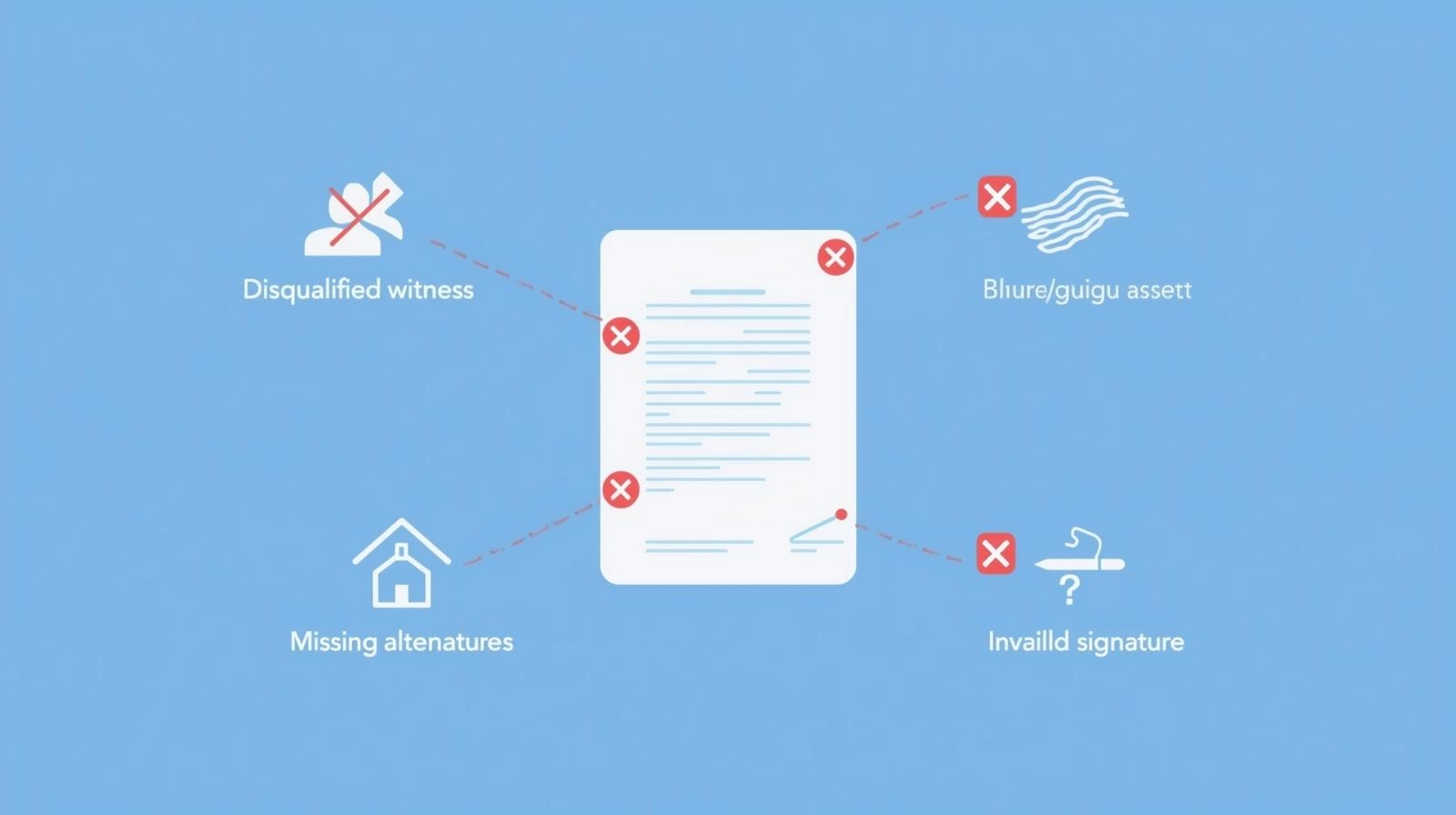
A will is the last gift you give to your family - a single document that arranges everything in advance and prevents unnecessary conflicts. Israeli law allows anyone to prepare a legal and valid will from home, without costs of thousands of shekels. But when mistakes are made, even small technical ones, the price is paid by those who matter most to us - the heirs.
Here are the most common mistakes in preparing an independent will, and how to easily avoid them:
1. Vague Wording: When the Intention Is Not Clear
Using general terms like "all my property" or "my children," without specifying full names and ID numbers, is an opening for interpretations and legal battles.
The Solution: Using printed and computerized text allows maximum precision. Be sure to specify full names, ID numbers, block and parcel numbers for properties, and bank account numbers. The more detailed the will, the harder it is to challenge it in court.
The "Everything to My Children" Trap
The single most common phrase in Israeli wills — "I leave everything to my children equally" — sounds clear and fair, but creates immediate legal ambiguity. Which children? Are stepchildren or adopted children included? Does "equally" mean each receives 50% co-ownership of every asset, including the family apartment? What if one child died before you? What happens to assets you acquire after writing the will?
Compare this vague instruction to a proper formulation: "I bequeath the apartment at [full address], registered under Block X Parcel Y in the Land Registry, entirely to my son Dan Cohen, ID 123456789. I bequeath my savings account at Bank Hapoalim, Branch 500, Account 12345, entirely to my daughter Michal Levi, ID 987654321." This version is unambiguous, executable, and resistant to challenge.
When Ambiguity Reaches Court
Israeli probate court disputes stemming from ambiguous wills can run for 2–5 years and cost tens of thousands of shekels in legal fees — often more than the disputed assets are worth. The lasting family damage is incalculable. A few extra minutes of careful, specific wording when writing the will prevents all of this.
2. Technical Errors That Invalidate the Document
A will is a formal document. Lack of a date, signature in the wrong place, or witnesses who don't meet legal requirements (for example, a witness who is also an heir), can lead to the entire will being cancelled in court.
The Solution: When using a smart system that generates ready-to-print text, you get clear instructions: where to sign, where to write the date, and how to have witnesses sign in a way that is unambiguous.
The Most Common Technical Disqualifier: Witness Eligibility
Section 35 of the Israeli Inheritance Law creates a powerful protection: if a witness to a will is also a named beneficiary — or the spouse of a beneficiary — the bequest to that person is automatically void (though the rest of the will may remain valid). Many people ask a close friend or adult child to witness their signature, not realizing that if that witness benefits from the will even indirectly, their specific inheritance is cancelled.
The legal checklist for eligible witnesses: (1) over 18 years old, (2) fully mentally competent, (3) not named as a beneficiary anywhere in the will, and (4) not married to any beneficiary. Neighbors, coworkers, or casual acquaintances are ideal choices. The witnesses do not need to read the will — they are only certifying that they saw the testator sign it willingly and competently.
3. "The Disappearing Assets": What Did We Forget to Include?
Many focus on the apartment or car, and forget digital assets, provident funds, pension savings, or items of sentimental value.
The Solution: Ensure your will includes a "basket clause" (residuary clause). This is a clause that determines that any property discovered in the future or not explicitly detailed will be divided among the heirs according to your wishes. This way you ensure no asset will be divided contrary to your intentions.
Assets Most Commonly Forgotten in Israeli Wills
- Pension and provident funds (קרן פנסיה / קופת גמל): These have separate beneficiary designation forms and are not automatically governed by your will. Coordinate your will with your pension fund beneficiary designations.
- Digital assets: Cryptocurrency wallets, PayPal and bank app balances, domain names, monetized social media accounts, and digital subscriptions with value.
- Loans owed to you: If anyone owes you money — a formal loan or informal family debt — that receivable is part of your estate and should be addressed.
- Intellectual property: Royalties from books, music compositions, software, or patents continue after death and can have significant ongoing value.
- Items of sentimental value: Jewelry, family heirlooms, artworks, and personal collections cause disproportionately large family conflicts when not assigned explicitly.
4. Stagnation: A Will That Doesn't Fit Reality
Life is dynamic: children are born, assets are sold, and people pass away. Certain life events require a will update, and a will written a decade ago may be irrelevant and even harmful today.
The Solution: Unlike a will with a lawyer that requires a renewed meeting and additional payment, a printed will is very easy to update. At every significant crossroads in your life, simply produce an updated version, sign it again and destroy the old version.
The "10-Year Rule" and Why Stale Wills Cause Conflict
Wills more than 10 years old are highly likely to be outdated in at least one significant way — a new grandchild unaccounted for, an asset that was sold, an heir who has died, or a relationship that has changed beyond recognition. Yet most people never update their will after the initial signing.
The practical standard is to review your will every 3–5 years even if nothing obvious has changed, and to update immediately after any of the 7 major life events: marriage, divorce, birth of a child or grandchild, death of a named heir, major asset acquisition or sale, significant change in family relationships, or a major financial change (large inheritance received, bankruptcy, etc.).
5. The Generic Internet Form Trap
A common mistake is downloading a "standard form" that is not adapted to your specific family structure. Such forms sometimes lack critical protections (like a "substitute heir" mechanism – what happens if an heir dies before the testator).
The Solution: Don't settle for copy-paste. Use a system that performs personal customization of clauses to your family and financial situation, to ensure maximum protection for heirs.
What a Customized Will Includes That Generic Templates Don't
- Substitute heir (יורש חלופי): Who inherits if your primary heir predeceases you? Without this clause, that share falls to intestate succession — not your next choice.
- Residuary/basket clause (סעיף סל): A catch-all covering assets not explicitly listed and assets acquired after writing the will.
- Asset balancing mechanisms: Instructions for handling joint ownership situations — who has the right of first refusal on the family apartment, how proceeds are split if it must be sold.
- Explanatory rationale: A brief sentence explaining unequal distributions, which significantly reduces the risk of will challenges on grounds of undue influence.
- Guardian designation: If you have minor children, naming a guardian is critical — generic templates routinely omit this entirely.
Alongside the mistakes to avoid, it's worth familiarizing yourself with the 5 critical points for a valid will — the two sides of the same coin.
Three Rules for a Winning Home Will:
- Printing: A printed will is clearer, prevents errors of readable handwriting, and gives the document an official and respectable appearance.
- Witnesses: Sign the will in the presence of two witnesses who do not benefit from the will (not heirs and not spouses of heirs).
- Accessibility: Keep the original will in a safe place and ensure the heirs know of its existence and location.
Frequently Asked Questions About Will Mistakes
What automatically makes a will invalid in Israel?
Several technical defects can invalidate a will under Israeli law. These include: missing a date or signature, signing in front of fewer than two witnesses, having a witness who is also a beneficiary (or the spouse of a beneficiary), and — for a holographic will — any portion that is not entirely in the testator's own handwriting. Courts can sometimes uphold a technically defective will if the intent is clear, but this requires a court proceeding and is never guaranteed. The safest approach is always to follow the formal requirements precisely from the outset.
What should I do if two conflicting wills are found?
Israeli law is clear: the latest validly executed will takes precedence and automatically cancels all earlier wills. However, if the dates are unclear, if there is suspicion of forgery or undue influence, or if the validity of either will is in question, the matter is resolved by the court — a process that can take years and cost far more than the estate itself. To avoid this, always date your will clearly, destroy old versions once you have signed a new one, and consider depositing your will with the Registrar of Inheritance Matters for safekeeping.
Can a will be contested if a beneficiary helped write it?
Yes, and this is one of the most common grounds for challenging a will. When a beneficiary participates in drafting the will — whether by typing it, translating the testator's wishes, or being present during its preparation — it raises a legal presumption of "undue influence." This presumption can be rebutted, but only through evidence showing that the testator acted with full independence and understanding. To protect against such challenges, the will should be prepared independently or through a neutral platform, and the witnesses should have no connection to any beneficiary.
How often should I review and update my will?
As a general rule, review your will every 3 to 5 years even if nothing obvious has changed. Beyond routine reviews, you should update your will immediately after any of 7 key life events: marriage, divorce or separation, birth of a child or grandchild, death of a named heir, acquisition of a significant new asset (apartment, business, large investment), a major shift in family relationships, and any large-scale financial change such as an inheritance received or bankruptcy. With a typed digital will, each update takes 15 to 30 minutes — print, sign before witnesses, and the new version automatically replaces the old one.
Summary: Avoiding Mistakes Is the Best Investment in Your Family's Future
The mistakes described in this article are not rare edge cases — they appear in a significant share of contested wills that reach Israeli courts every year. Most of them are completely avoidable with a small amount of care and the right tools. A will that is printed, dated, signed before two impartial witnesses, and includes a residuary clause and substitute heirs gives your family the clearest possible path forward.
The I-Will system was built specifically to guide you past every one of these pitfalls. Whether you are writing your first will or updating an existing one, the platform walks you through each required element, flags potential problems, and produces a document that is ready to sign — with no legal background required.